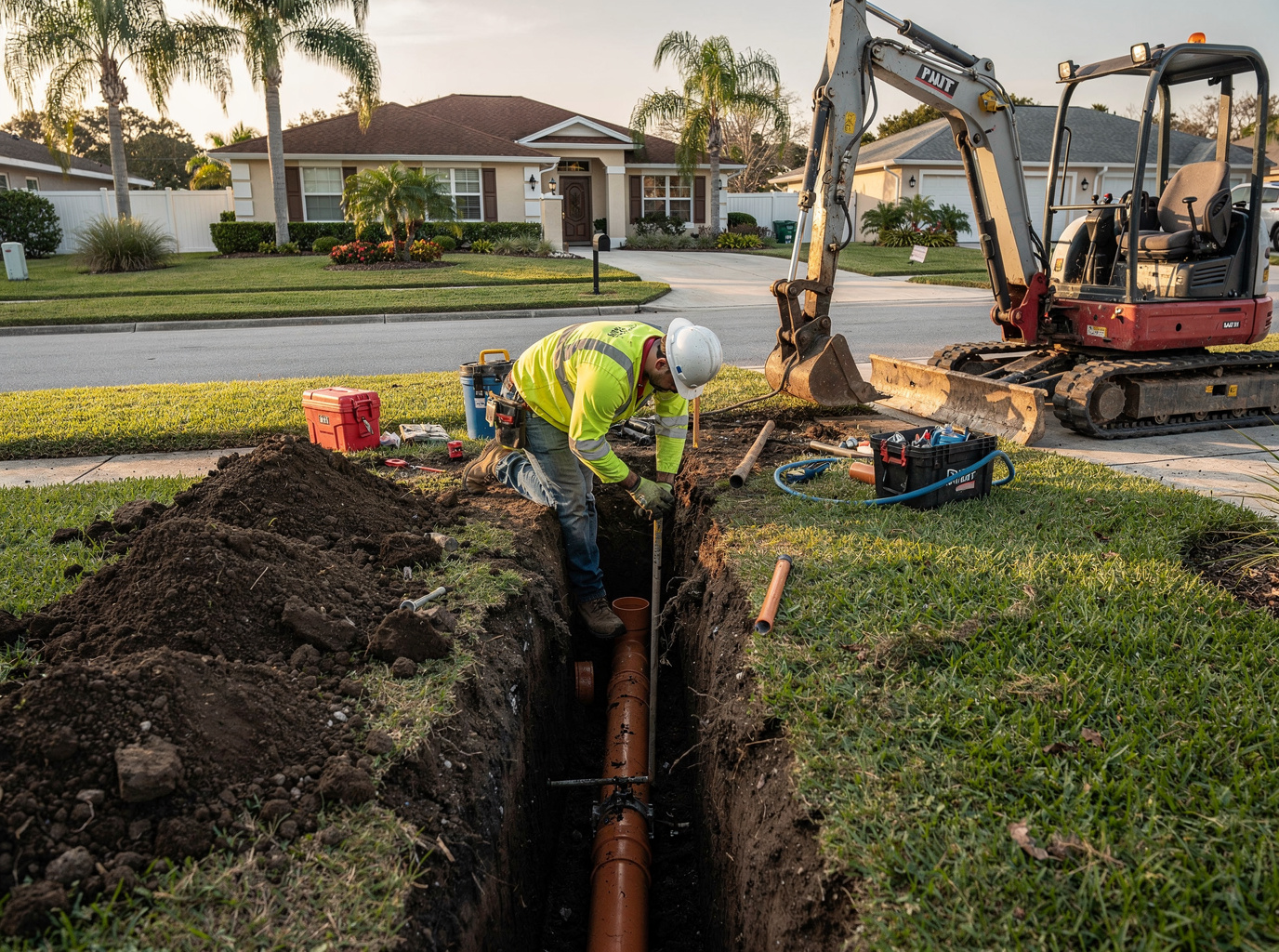
Sanford's humid subtropical climate brings hot summers that expand older pipes while mild winters let tree roots keep growing toward sewer lines. Homes in the Sanford Historic District and Celery City often still have clay or cast iron lines installed decades ago that crack under shifting sandy soils near Lake Monroe. When these lines fail, backups usually show first at the lowest fixtures during heavy summer rains.
Plumbers working in Altamonte Springs and Heathrow see the same pattern: roots from mature oaks and maples follow the moisture gradient straight to joints. Trenchless lining works well here when the break is isolated, but full replacement is sometimes required once the line has multiple fractures from repeated wet-dry cycles. Access through small yards in Lake Mary neighborhoods often rules out heavy equipment, so hand digging and camera location become essential.
County rules in Seminole County require permits for any excavation that crosses property lines or affects storm drainage. Ignoring the permit step can delay a job by weeks if inspectors flag the work. Local crews also watch for high water tables after storms, which can turn a simple dig into a dewatering project before the new pipe goes in.
Technician insight
In Sanford the thing that catches most people out with Sewer Line Repair is how fast roots return in our mild winters. Homeowners in Celery City and the Historic District often wait until the second backup before calling, by then the clay pipe has multiple fractures and the repair has to extend farther than the first camera look suggested.
Backup on a Celery City Street
A homeowner near the Wayne Densch Performing Arts Center reported slow drains after a summer storm. Camera inspection showed roots at two joints in 1950s clay pipe. We lined the damaged section from the cleanout to the street connection, restored the small front yard, and the line has stayed clear through the following rainy season.
How it works
- 1
Camera Inspection
Run a video line from the cleanout through the main to pinpoint the exact location and type of failure without guesswork.
- 2
Locate And Mark
Map the sewer path relative to foundations, driveways and utilities in neighborhoods like Downtown Sanford so excavation stays minimal.
- 3
Repair Or Replace
Choose spot repair, lining or full section replacement based on pipe material, depth and how many joints are compromised.
- 4
Backfill And Test
Restore the trench, compact soil to prevent future settling, then run a final camera pass and flow test before closing the job.
Pricing
Cost depends on depth, access and whether lining or full replacement is required; upfront quotes are provided after the camera inspection.