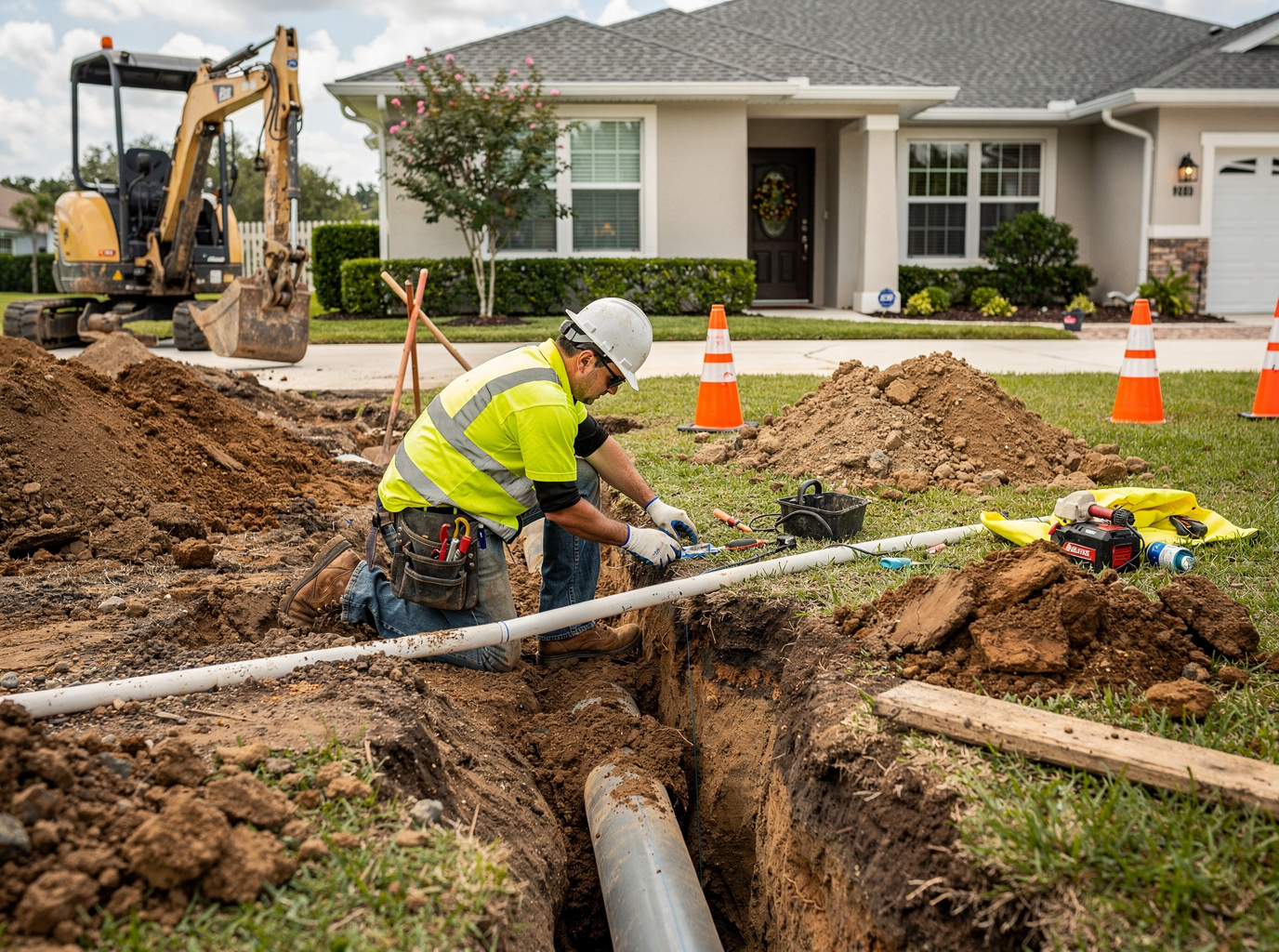
Sanford homes built before 1970 in the Historic District and Celery City often still have clay or cast-iron lines that crack under shifting Seminole County soil and aggressive root growth from nearby oaks. Hot, humid summers bring heavy afternoon storms that saturate the ground, pushing roots toward any moisture leak and turning small fractures into full collapses. Replacement work here usually requires locating the line from the house cleanout to the street connection, confirming the exact material transition, and deciding between open trench or pipe-bursting methods based on driveway and landscaping constraints.
Lake Mary and Heathrow properties sit on slightly higher ground with more sandy fill, which can make trenchless bursting viable, yet the same subtropical rains still drive root intrusion along the pipe path. Downtown Sanford and Altamonte Springs jobs frequently encounter shared laterals or older city taps that must be coordinated with Seminole County utilities before any excavation begins. Crews also check for backflow preventers and cleanout placement to meet current code while minimizing disruption to mature landscaping that homeowners expect to remain intact.
Mild winters keep the ground workable year-round, but sudden summer downpours can flood open trenches overnight, so crews stage pumps and schedule backfill the same day whenever possible. The 105 W Commercial St base lets us reach most Sanford addresses within twenty minutes, which matters when a line fails during a storm and sewage is backing up into the home.
Technician insight
In Sanford the thing that catches most people out with Sewer Line Replacement is how fast roots return after a simple auger job on clay pipe. Once the line is cracked in Historic District or Celery City soil, the next heavy summer rain pushes more roots in and you end up replacing the whole run anyway. Homeowners often wait until sewage is in the yard before calling, which turns a one-day job into a multi-day mess with pumps and temporary fencing.
Collapsed Line Near Lake Monroe
A Celery City homeowner noticed slow drains after several days of rain. Camera inspection showed a crushed clay section under the driveway with heavy root intrusion. We burst the old line from the cleanout to the street connection, installed new HDPE, and restored the concrete without cutting into the main driveway slab. The system now handles peak summer flows without backup.
How it works
- 1
Camera Inspection
Run a camera from the cleanout through the entire lateral to map cracks, root balls, and the connection point at the street.
- 2
Access Planning
Mark utilities, check driveway and fence clearances, and decide between open trench or pipe bursting based on soil conditions and landscaping.
- 3
Pipe Removal or Bursting
Excavate access pits or set up bursting equipment, remove the old line, and pull new PVC or HDPE into place while maintaining proper slope.
- 4
Testing and Restoration
Pressure test the new line, backfill and compact, then restore sod or concrete so the yard matches its original condition.
Pricing
Pricing depends on length, depth, access method, and whether the line runs under pavement or mature trees.